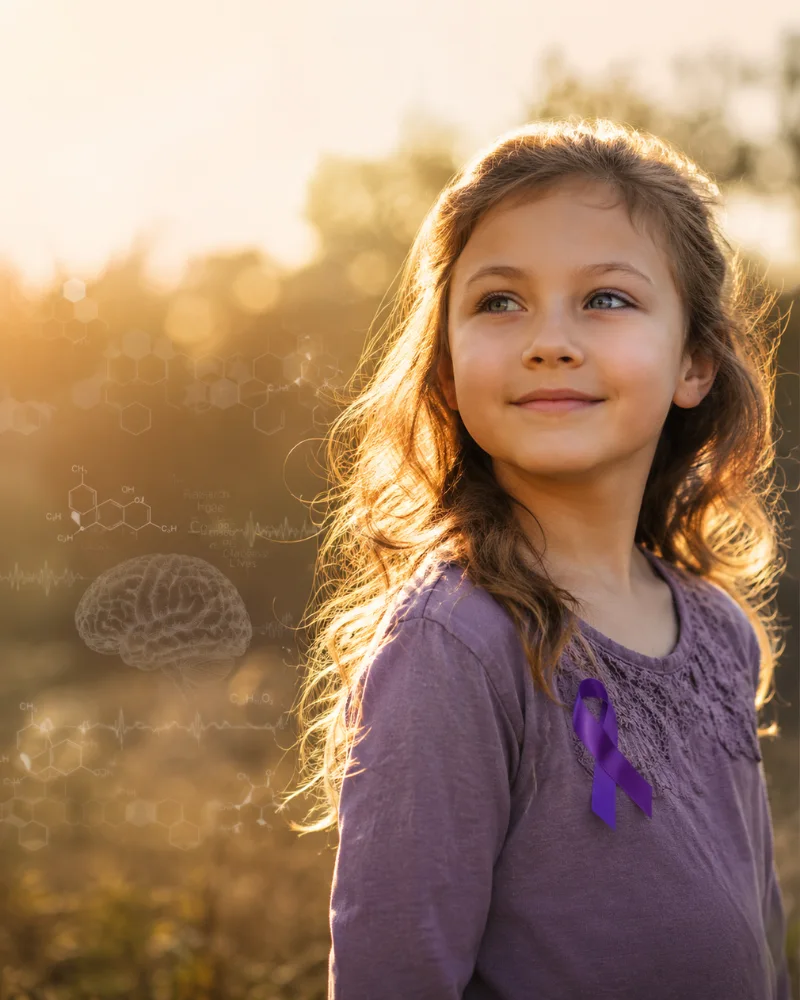
A Little Girl and 300 Seizures a Week
Charlotte Figi was born on October 18, 2006, in Colorado Springs, Colorado. She was a healthy twin. She smiled early, reached her milestones, showed every sign of the life ahead of her. At three months old, she had her first seizure. It lasted thirty minutes and it did not stop there.
By age five, Charlotte was having 300 grand mal seizures every week. Three hundred. In seven days. She had been diagnosed with Dravet syndrome, a rare and catastrophic form of childhood epilepsy with no reliable treatment and no known cure. She had tried seven different anti-seizure medications. She had been put into medically induced comas to stop seizure clusters. She had lost the ability to walk, talk, and eat. Her heart had stopped twice.
Her parents had been told there was nothing more to be done. They began to research, desperately, for anything they had missed. What they found was a single published case report from California describing a child with Dravet syndrome who had responded to a high-CBD cannabis extract.
What Her Parents Did Next
Paige Figi, Charlotte’s mother, was a former military nurse. She understood medical research. She knew how to evaluate a case report critically. She also knew that her daughter was dying and that conventional medicine had run out of options.
She located a group of Colorado cannabis breeders who had developed a high-CBD, low-THC hemp strain originally intended for adult patients who wanted therapeutic benefit without psychoactivity. She asked them if they would help her daughter. They were hesitant at first, uncertain about working with a five-year-old. They ultimately agreed.
The extract was prepared. Charlotte’s parents gave her a small dose mixed into food. She went seven days without a single seizure. For a child who had been having forty to fifty seizures a day, seven days without one was not a data point. It was a miracle that demanded explanation.
What Happened to Charlotte
The response was not a fluke. With consistent daily use of the high-CBD extract, Charlotte’s seizures dropped from 300 a week to two to three per month, almost exclusively during sleep. She began to walk again. She began to talk again. She started eating on her own. She rode a bike for the first time in her life at age six.
Dr. Margaret Gedde, the physician who began working with Charlotte and her family, documented the response carefully. The improvement was dramatic, rapid, and sustained. It was also something that no existing pharmaceutical had achieved after five years and seven medication trials.
CNN correspondent Dr. Sanjay Gupta had publicly opposed medical cannabis. He spent a year investigating Charlotte’s case and the emerging science, then reversed his position entirely in a 2013 documentary that was watched by millions of people worldwide. His public reversal was one of the most significant single moments in the shift of mainstream American opinion toward cannabis medicine.
Why Dravet Syndrome Responded
Dravet syndrome is caused in most cases by a mutation in the SCN1A gene, which encodes a sodium channel critical to the function of inhibitory neurons. When those inhibitory neurons fail, the brain loses its ability to regulate electrical activity. Seizures are the result of uncontrolled electrical storms moving through neural tissue.
The endocannabinoid system plays a regulatory role in neuronal excitability. CB1 receptors are distributed throughout the brain and are involved in modulating both excitatory and inhibitory signaling. CBD’s mechanisms in seizure reduction include modulation of sodium channels, serotonin receptor activity, and GABA signaling in addition to its ECS interactions. These align with the specific pathophysiology of Dravet syndrome in ways that made the response scientifically explicable, even if it was not predicted.
Research published in The New England Journal of Medicine in 2017 reported results of a randomized, double-blind, placebo-controlled clinical trial of a pharmaceutical-grade CBD formulation in patients with Dravet syndrome. Median convulsive seizures per month dropped from 12.4 in the placebo group to 5.9 in the CBD group. The difference was statistically significant. This was not a case report. This was gold-standard clinical trial evidence, eventually leading to the first FDA approval of a plant-derived CBD medicine in June 2018.
What Changed
Charlotte’s story broke at a specific moment in cannabis history. Colorado and Washington had just legalized recreational cannabis. Medical cannabis programs were operating in nearly twenty states. But CBD was still largely unknown outside of cannabis circles, and the idea that a child with catastrophic epilepsy could respond to a hemp extract was genuinely incomprehensible to most of the American medical establishment.
After the CNN documentary aired, families from across the country and from other countries began contacting Paige Figi. Families with children who had exhausted conventional medicine. The organization she founded to help them eventually moved hundreds of families to Colorado to access the extract.
This movement put direct pressure on state legislatures. Within a year of Charlotte’s story going national, multiple states passed CBD-access laws allowing high-CBD, low-THC hemp extract for children with epilepsy. These were the first dominos in what became a broader legislative shift toward hemp legalization, culminating in the 2018 Farm Bill that made hemp federally legal and opened the door to the CBD industry as it exists today.
Charlotte’s Legacy
Charlotte Figi died on April 7, 2020. She was thirteen years old. The cause of death was complications her family believed may have been related to COVID-19. She had lived eight years longer than anyone expected when her seizures were at their peak.
In those eight years she had walked, ridden horses, gone to school, laughed, and lived in ways that were unimaginable when she was five years old and having 300 seizures a week. She had also, without anyone planning or anticipating it, changed the trajectory of cannabis medicine in the United States.
The clinical research she inspired is ongoing. The FDA approval that followed her story has led to continued investigation of cannabinoids in treatment-resistant epilepsy. The legislative changes she catalyzed opened access for millions of people to products that have helped them in ways that are real, documented, and life-changing.
I have been in this industry for forty years. I was here when Charlotte’s story landed and I watched what it did to the conversation, not just in cannabis circles but in living rooms and doctors’ offices and state legislatures across the country. It changed everything. She changed everything.
Her story is part of why I do this work. The plant is real. The science is real. The people it helps are real. Charlotte proved all of that to a world that needed proof.
References: Devinsky O et al. Trial of Cannabidiol for Drug-Resistant Seizures in the Dravet Syndrome. N Engl J Med. 2017. | Devinsky O et al. Cannabidiol in patients with treatment-resistant epilepsy: an open-label interventional trial. Lancet Neurol. 2016. | Rosenberg EC et al. Cannabinoids and Epilepsy. Neurotherapeutics. 2015.
FDA DISCLAIMER: These statements have not been evaluated by the Food and Drug Administration. This product is not intended to diagnose, treat, cure, or prevent any disease. This article is for educational purposes only and does not constitute medical advice.
Continue Reading
Rylie Maedler and Rylie’s Law: How One Little Girl Changed Delaware and the Nation
Rylie Maedler was seven years old, fighting cancer and seizures, when her father began lobbying Delaware to legalize medical CBD. Rylie’s Law passed in 2015. This is her story.Your Body Runs on Electricity. Robert Becker Spent His Career Proving It.
Robert O. Becker spent thirty years at a VA hospital proving that the human body is fundamentally electromagnetic. His peer-reviewed research — published in Nature and the Journal of Bone and Joint Surgery — is the scientific foundation for bioelectric healing. Paul ImOberstag explains why it matters and why Banner Harvest built a room around it.Why We Started in Illinois
Some things come together all at once. The land, the timing, the people, and the law. When that happens, you recognize it. You do not hesitate. That is how Banner Harvest began in Illinois. The Farm Was Already There Paul’s uncle Bud Grieves had a farm outside Peoria with land that had been fallow for…